
How “Rumah Inklusif” Supports People with Disabilities and Their Parents
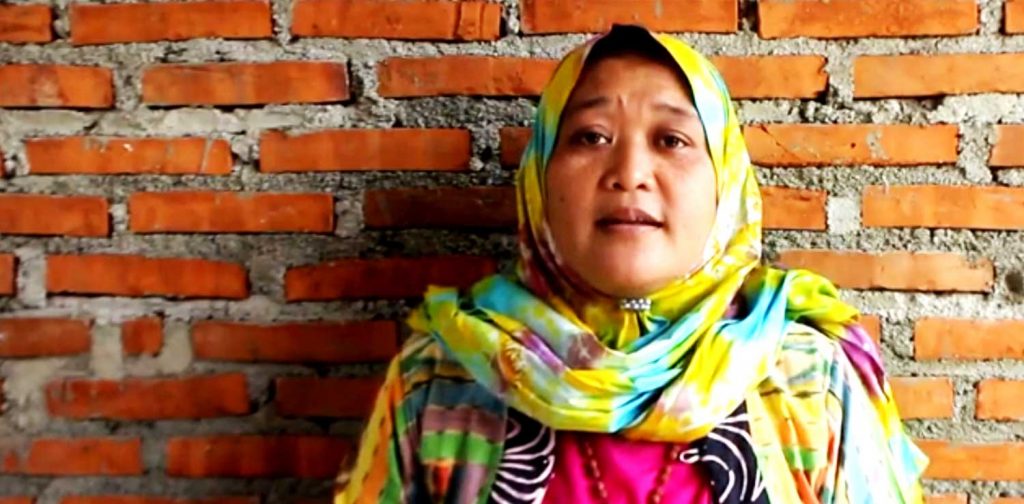
Muinatul Khoiriyah, founder and director of Rumah Inklusif in Kebumen, Central Java, Indonesia
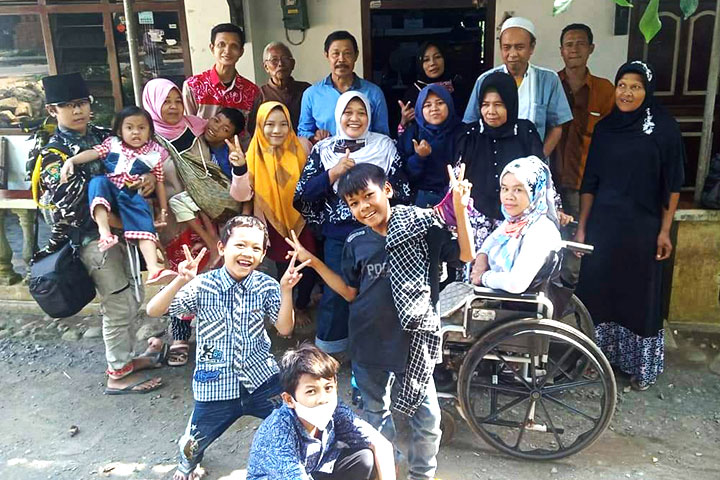
Rumah Inklusif (Inclusive House) is the name of a humanitarian organization in Kebumen, Central Java province of Indonesia. In a Joglo-style (traditional Javanese house) building, Muinatul Khoiriyah and the parents assist people with disabilities in learning and creating.
Since 2009, Rumah Inklusif has been working to empower and boost the confidence of people with disabilities. With its consistent work, this community has become the go-to reference for disability rights activists in Kebumen and the surrounding area. Rumah Inklusif has received many public figures and the general population interested in learning about inclusivity issues regarding people with disabilities.
Batik Pegon is one of the featured products by people with disabilities from Rumah Inklusif. Batik is a traditional patterned Indonesian fabric made using the ancient technique of wax-resist dyeing. And Pegon is an Arabic script used to write Javanese, Madurese, and Sundanese languages. Through this art, Rumah Inklusif displays how people with disabilities can be included, empowered, and productive in society.
Here is our exclusive interview with Muinatul Khoiriyah by Zia Ul Haq of Green Network, concluded from June 2nd to June 3rd, 2021, via WhatsApp.
What is the main problem you see regarding disability issues in society?
Discrimination against people with disabilities is still rampant, so they do not receive fair opportunities or even basic decent treatment in society. Unfortunately, there are also still plenty of people who think less of children with disabilities.
It takes a long while to create understanding in society for them to see people with disabilities as fellow humans and citizens. For instance, back when we used to hold most of our activities at the musala (prayer space for Muslims) and our students took some time to rest there afterward, our neighbors refused to come into the musala. They thought children with disabilities made the musala dirty because there was one child with their saliva smeared all over. They felt disgusted to the point that they refused to shake hands with the children.
It pained me to see that. Things like that make children with disabilities even more isolated, thus making their parents even more stressed. This happens almost everywhere.
Was that why you decided to embrace people with disabilities in a community?
To be more exact, it’s the families with children with disabilities. Initially, this community was simply a place where my children and their friends could play with no fear of bullying. It then grew to be where parents gathered and shared their stories, experiences, and grievances about caring for children with disabilities. In its development, many people with disabilities then joined our community activities.
There are many findings from our sharing sessions. They include and are not limited to 1) certain taboo, illogical, and mystical beliefs about giving birth to children with disabilities, 2) hostile and abusive families with children with disabilities, 3) difficulties for children with disabilities and their families to socialize in their environment due to discrimination, and 4) how general and religious education is hard to access for children with disabilities.
What have you and your community done to fight those things?
With other parents who are blessed with children with disabilities, we created a community. At first in 2009, it was called Komunitas Keluarga Difa Kebumen (Kebumen Community for Families with Disabilities). Through this community, we supported each other and learn from each other on how to guide and assist our children.
Caring for children with disabilities can be exhausting physically and mentally. It can make parents stressed. However, through a community, parents can regularly gather and share their stories and load. From this simple activity, our community grew.
What’s the story of how Rumah Inklusif came to be?
In our process, we realized that the name of our community was unconsciously exclusive when our children with disabilities would later live openly in general society. It would be impossible to teach them to live individually and exclusively. Instead, they needed to be included and grow with other people.
That was why we decided to change our name to Rumah Inklusif in 2015 in the hope of being home to learn respect and acceptance among families and people with disabilities involved in our community.
What empowering activities does Rumah Inklusif hold?
We have done so many things. Even small things can be something real and significant to answer fundamental problems that people with disabilities and their families face daily.
Besides gathering, we also hold activities and create things as media to campaign for inclusive values of humanity and love for everyone, including people with disabilities, and imbed those values to society.
For example, in Rumah Inklusif, we produce Batik Pegon. We also have an inclusive financial pool (cooperative) that started because many families with disabilities are in debt. We guide them to learn sales and manage money. Our revenues, even though there aren’t much, are then put into the communal savings.
In conclusion, in Rumah Inklusif, we gather, synergize, study the holy book, learn, create, produce, and sell. Our Batik Pegon products have often been displayed in many places and events.
Does that list include campaigning for disability-friendly values?
Yes, of course! Rumah Inklusif holds many events for people and accepts visits from other communities to learn about disability issues and values together. However, the most important thing is how we can guide and assist children with disabilities to thrive and be independent.
Rumah Inklusif also routinely gives input to local government through musrenbangkab (regional level development planning community discussion) or accompaniment in regional regulation-making related to education and disability rights.
What policies do you hope to see from the government?
To this day, Rumah Inklusif has never received financial aid from the government. Therefore, we hold all our events and activities at Rumah Inklusif from our own pocket. We hope the government will enforce policies and regulations that are fair and friendly to people with disabilities.
Generally, the government’s awareness of disability rights is better these days, even though it’s still far from ideal. However, we haven’t seen the government’s specific concern regarding the parents or families of people with disabilities. Based on our experience on hand, they could be worse off and more vulnerable. The government needs to take care of that.
For instance, the moment a child is born with a disability, they can still grow up and experience life joyfully. But, meanwhile, the parents are immediately hit with scrutiny, stigma, expensive medical bills, and education costs. Those things bring them down, and that’s not good for the development of children with disabilities and their future.
We hope the government gives more consideration to the situations of people with disabilities and their families then actualizes concrete solutions through inclusive and fair policies for all Indonesian citizens.
Does your community partner with the private sector? Do you have anything to say to business people?
Yes, we’ve collaborated with a community from Jakarta, Komunitas Agen Kebaikan dan Batik Palbatu (Palbatu Community of Goodness Agent and Batik). They came here to share their knowledge and expertise on batik with our community. That skill and knowledge sharing was what birthed Batik Pegon. We hope that businesses will support our effort by sharing knowledge, expertise, and opportunities to upskill people with disabilities.
What do people with disabilities need from society? Do you have a message for everyone?
They need care; they need kind and fair treatment. People with disabilities have the same rights as everyone else. Refrain from thinking of them as less or discriminating against them. Instead, we need to help and empower each other for the common good.
-End-
Editor: Marlis Afridah
Translator and Editor: Nazalea Kusuma
To learn the original version of this article in Indonesian, read Green Network ID.
Rumah Inklusif’s activities can be found on YouTube Rumah Inklusif.
Zia Ul Haq
Zia is a Reporter at Green Network Asia. He graduated from UIN Sunan Kalijaga Yogyakarta with a bachelor's degree in Islamic Education. He is currently a Learning Companion at Qaryah Thayyibah Learning Community (KBQT).
YOUR TITLE FOR CONDITION 1
YOUR BODY TEXT FOR CONDITION 1
 Inside Experian’s Sustainability Journey: An Interview with Chief Sustainability Officer Abigail Lovell
  Thinking Through Product Life Cycle and Good Practices for Sustainability: An Interview with David Croft from Reckitt
  AC Ventures: ESG and Impact Investing in Southeast Asian Startups
  Jendela Papua: Reflection of Us, Papua, and Indonesia, for the World
  Exploring the Role of Food and Women in Sustainability Education for All with Sustainability Scool
  Sakola Wanno in Conserving the Nature and Culture of Sumba Island
  Test Custom Feature Image
  Test premium post
  Electric Vehicles Roam the Roads of Kenya