
Centering Survivors in Ending Violence Against Women
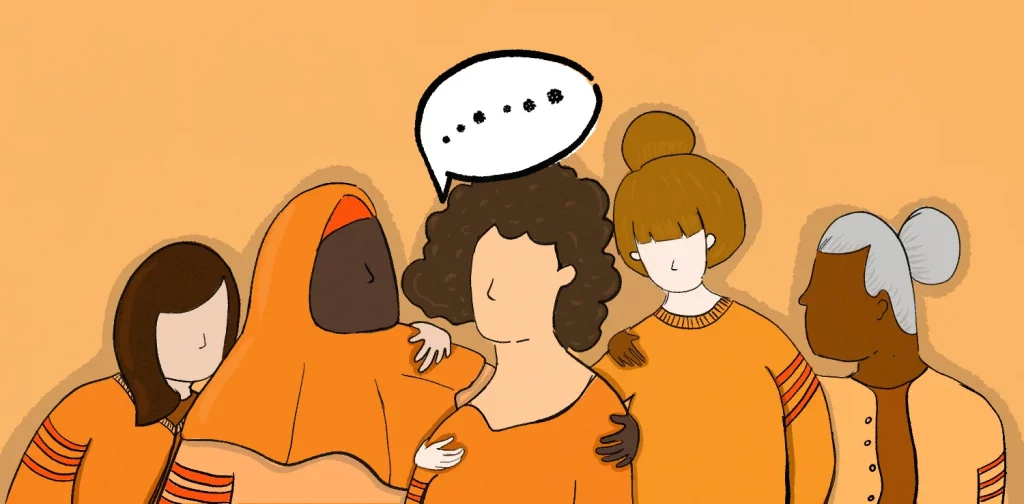
Illustration by Irhan Prabasukma.
Safety and peace are fundamental rights for every person. Yet, despite centuries of movement, women and girls are still vulnerable to violence. From their closest home environment to workplaces to online spaces, violence against women persists, often leaving the survivors with no voice and nowhere to turn to.
One in Three
Violence against women and girls is a human rights violation. Approximately one in three women worldwide has suffered physical and sexual abuse, often by an intimate partner. UNICEF also states that between 2005 and 2020, at least 14,200 children suffered from various sexual violence.
Experiencing abuse can cost a woman her whole life. Survivors of gender-based violence suffer from various physical and mental consequences such as unwanted pregnancies, HIV contraction, post-traumatic stress disorder (PTSD), and suicidal thoughts. It’s nearly impossible to navigate them alone.
Unfortunately, it’s not uncommon for survivors to shy away from getting help. The culture of victim blaming and social customs often hinder survivors from coming forward in fear of getting shamed or ostracized from society. In some cases, survivors are forced to marry their perpetrators as a form of ‘settlement.’ Other survivors don’t even have access to help at all, putting them at significant risk of poverty, isolation, and additional violence.
A Survivor-centered Approach
Creating a safe environment for survivors to navigate their lives after abuse requires a survivor-centered approach. It seeks to empower survivors by prioritizing their rights, needs, and wishes. It also means ensuring access to appropriate, accessible, and good quality services, including healthcare, psychological and social support, security, and legal services.
The key to a survivor-centered approach is returning agency, dignity, and respect to the survivors. Therefore, it is crucial for the service delivery actors, including legal aids and counselors, to possess the appropriate attitudes, knowledge, and skills to prioritize the survivor’s own experiences and input. In law-making, a survivor-centered approach also plays a significant role in ending violence against women.
“It is extremely important to speak to survivors and ask them frankly what would make their lives easier. We ask survivors what laws would make them feel safer, and hold the offender accountable, knowing that, especially in the case of domestic violence, the relationship between offender and victim may continue,” said Lori Flohaug, Director of Law and Policy at Global Rights for Women.
Violence against women is a broad and complex matter. However, one thing remains true: every woman and girl deserves to live safely and peacefully without fear. Providing care and guidance for the survivors at every level of society is essential. But, ending violence against women altogether still needs to be the primary goal. Putting the survivors at the center of prevention and mitigation measures can hopefully bring us one step forward to realizing a safe living environment for all.
Editor: Nazalea Kusuma

Kresentia Madina
Madina adalah Asisten Manajer Publikasi Digital di Green Network Asia. Ia adalah lulusan Program Studi Sastra Inggris dari Universitas Indonesia. Madina memiliki 3 tahun pengalaman profesional dalam publikasi digital internasional, program, dan kemitraan GNA, khususnya dalam isu-isu sosial dan budaya.

YOUR TITLE FOR CONDITION 1
YOUR BODY TEXT FOR CONDITION 1
 Test Custom Feature Image
  Electric Vehicles Roam the Roads of Kenya
  FedEx Engages Employees with Beach Clean-Up Initiative
  Come Back Stronger: Building Philippines’ Resilient Economy Post-COVID-19
  Inside Experian’s Sustainability Journey: An Interview with Chief Sustainability Officer Abigail Lovell
  5 Food System Actors That Have Taken the 123 Pledge to Reduce Food Loss & Waste
  Test premium post