
Can Wildlife and Oil Palms Coexist?
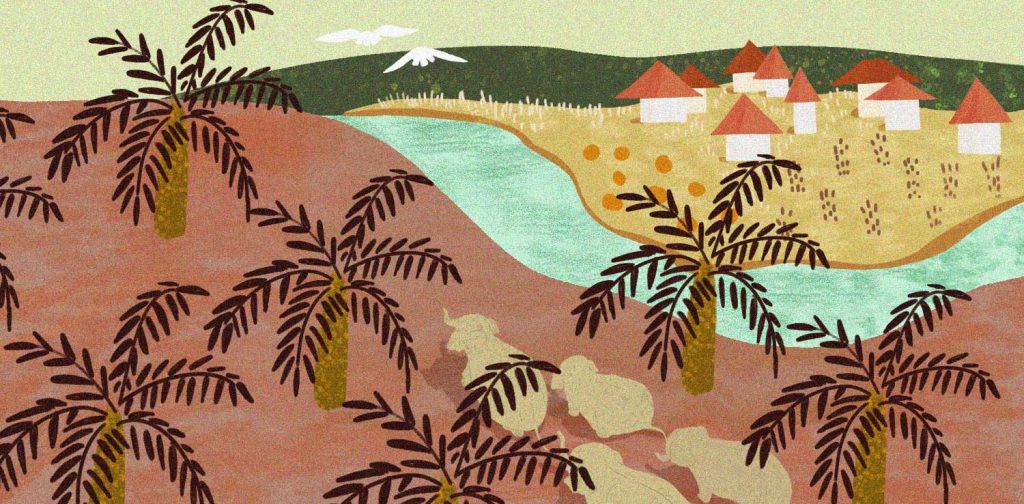
Illustration by Inez Kriya
As to everything, there are pros and cons to how Elaeis guineensis plantations impact the environment. Biodiversity loss due to unsustainable practices of palm oil production has been an emerging topic of discussion everywhere, especially in the European Council. Scholars and scientists are gathering evidence to prove the hypothesis that palm oil and wildlife could not coexist. Multiple international studies have indicated the importance of intrinsic values in motivating the adoption of conservation practices.
Oil palm is an essential crop to the GDP of some countries such as Indonesia and Malaysia. According to the UNDP, about 16 million jobs in Indonesia alone depend directly or indirectly on the palm oil sector. Putting this into consideration, I believe boycotting palm oil is not always the answer. However, developing a plan of action to tackle issues surrounding the palm oil industry deeper, further, and faster is necessary.
My recommendation for a hypothesis that can work is practicing sustainable intensification. Sustainable intensification refers to an approach of agriculture to increase the yield and productivity of existing agricultural land while decreasing its negative environmental impacts through innovative methods that do protect natural resources and do not involve the expansion of agricultural production areas.
Protected areas are designated areas with the primary function of protecting environmental sustainability that includes natural resources, artificial resources, and the historical and cultural value of the nation in the interests of sustainable development. The management of protected areas is an effort to establish the preservation and control of the utilization of protected areas. The opportunity for wildlife and oil palm plantation to coexist may positively impact biodiversity. Sustainable intensification suits this idea very well.
How?
Ulmanen et al. (2012) stated, “for conservationists in the world, protecting biodiversity in the palm oil plantation has, in recent years, become much less about securing new protected areas in pristine habitat and more about making room for wildlife on the margins of our own urbanized existence.” Economy and ecology can come hand-in-hand with the right methods and approach; that is why it is essential to be innovative and find different solutions and strategies.
There are many different practices and hypotheses that can be done; however, my recommendations focus on creating wildlife-friendly environments in the non-producing areas enclaved within oil palm plantations. Three main areas to consider are the river stream, the plantation floor, and the possible migration route for wildlife.
First, the river border in plantation areas can be planted with edible plants such as nuts and fruits. The river can also provide fresh water for wildlife in the area. This area with a minimum distance of 10 – 15 meters from the river will function as a livable area for wildlife, and it is forbidden for Elaeis guineensis to be planted.
Second, the Elaeis guineensis plantation floor can be planted with edible shrubs, roots and tubers, mushrooms, and berries to mimic natural forest. This creates an artificial forest within the plantation that can serve as a food forest for wildlife species. Oil palm trees need well-draining soil that is rich in nutrients, so an edible forest should easily be achieved.
Third, certain areas in oil palm plantations can be deliberately conserved for the migration routes of wildlife. Wildlife migration may be triggered by local climate, food availability, seasons, or for mating purposes. Many industrial oil palm plantations have taken over their natural migration routes to neighboring community forests, protected forests, or national parks. It is essential to correct this error by providing migration routes for wildlife that are safe and rich in the food supply.
However, is this enough? How can we ensure it can coexist and improve natural resources management? This sustainable intensification method can lead to producing more output from the same area of agricultural land while reducing the negative environmental impacts and, at the same time, increasing contributions to natural capital and the flow of ecological services. It is crucial to remember that to implement this method, among which are my three recommendations above, a completely integrated approach and a willingness among stakeholders in the palm oil sector to consider this bio-economy approach are needed.
Editor: Nazalea Kusuma

Sidi Rana Menggala
Sidi is a Bioscience Engineer at Ghent University, Belgium. He is also the Chairman of Beyond Moringa Indonesia Association (ABMI).
YOUR TITLE FOR CONDITION 1
YOUR BODY TEXT FOR CONDITION 1
 Interdisciplinary Research: In Search of the Complete Truth
  The Fall of Indonesia’s Golden Age of Rice
  Trash Talking the Urban Waste Management
  Tiktok & “Green Influencers”: Can They Make an Impact?
  Indonesia’s G20 Presidency and the Legacy of Islamic Economics & Finance
  Am I Suicidal?
  Test Custom Feature Image
  Test premium post
  Electric Vehicles Roam the Roads of Kenya