
The Atacama Desert Clothing Graveyard: Facing Overproduction in Fashion
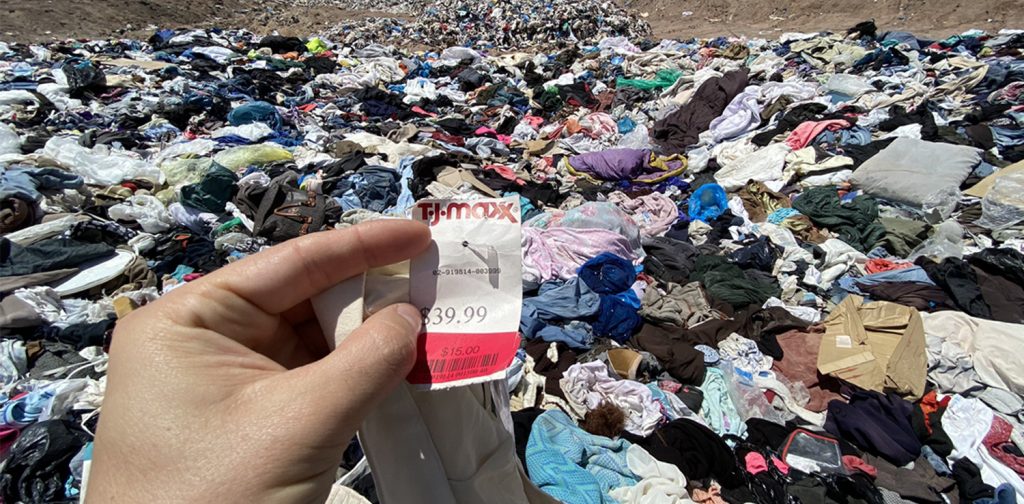
Photo by Jason Mayne / People Dispatch Twitter
In recent years, fast fashion has been heavily criticized for its rampant labor exploitation in the form of sweatshops with underpaid or even child workers. However, we must also address its environmental effects. End-of-life fashion waste is one of the big ones, covering The Atacama Desert in Chile with unwanted clothing.
Aljazeera reported that about 59,000 tons of clothing per year arrive at the Iquique port in northern Chile. These clothing items—mostly made in China and Bangladesh—come from all over the world, with many of them still new.
Then, only about 20,000 tons of it are bought to be resold, bought to be upcycled as other items, carried to municipal landfills, or smuggled to nearby countries. The Atacama Desert acts as a landfill and holds the leftovers with around 39,000 tons of new arrival each year.
“The problem is that the clothing is not biodegradable and has chemical products, so it is not accepted in the municipal landfills,” said Franklin Zepeda, the founder of EcoFibra. This company produces insulation panels from discarded clothing.
These wasted clothes can take over 200 years to disappear, if ever. Other times, non-biodegradable unsold clothes are burned or buried, releasing toxins from the garments into the air and the water.
Fast fashion has shifted an average person’s purchasing habits. According to McKinsey’s The State of Fashion 2019 report, people bought 60% more clothing items than they did 15 years ago while only keeping them for half as long as they used to.
Activists and media have urged consumers to change their fashion habits to be more sustainable. Some clothing brands have also tried to ‘fix’ the issue; although, greenwashing remains prevalent. Yet, with most of the clothes in the Atacama Desert being unsold and unused, the most critical problem might lie somewhere else.
A UN report from 2019 stated that clothing production doubled between 2000 and 2014, supported by another report from the Ellen McArthur Foundation from 2004 to 2019. The UN report revealed some fashion industry statistics. Among them were that “clothing and footwear production is responsible for 8% of global greenhouse gas emissions” and “7,500 liters of water needed to make one pair of jeans”.
A recent Twitter thread by Peoples Dispatch about the Atacama Desert sparked ire. Some people pointed out how it was proof that it did not matter whether these clothes were bought because brands would produce them anyways.
In short, there is a matter of overproduction that needs to be addressed immediately.
Editor: Marlis Afridah

Nazalea Kusuma
Naz is the Manager of International Digital Publications at Green Network Asia. She is an experienced and passionate writer, editor, proofreader, translator, and creative designer with over a decade of portfolio. Her history of living in multiple areas across Southeast Asia and studying Urban and Regional Planning exposed her to diverse peoples and cultures, enriching her perspectives and sharpening her intersectionality mindset in her storytelling and advocacy on sustainability-related issues and sustainable development.

YOUR TITLE FOR CONDITION 1
YOUR BODY TEXT FOR CONDITION 1
 Test Custom Feature Image
  Electric Vehicles Roam the Roads of Kenya
  FedEx Engages Employees with Beach Clean-Up Initiative
  Come Back Stronger: Building Philippines’ Resilient Economy Post-COVID-19
  Inside Experian’s Sustainability Journey: An Interview with Chief Sustainability Officer Abigail Lovell
  5 Food System Actors That Have Taken the 123 Pledge to Reduce Food Loss & Waste
  Test premium post