
Skip to content
Tue. Sep 29th, 2026
  • About
  • Partner with Us
  • Press Release Guidelines
  • Op-ed Guidelines
  • Indonesia
Primary Menu
  • Home
  • Latest
  • News
  • Rilis
  • Brief
  • Interview
  • Opinion
  • Figure
  • Youth
  • SDGs
  • Topics
  • #LetterfromtheFounder
  • Membership Levels
  • Membership Account
  • Your Profile
  • Log In
  • Membership Account
  • Your Profile
  • Membership Levels
  • Membership Invoice
  • Membership Billing
  • public-menu
    • NewsInformative and light. Bringing you stories from events, developments, innovations, policies, programs, good practices, reports, research findings, conferences, and movements in governments, businesses, and civil society in the Asia Pacific and beyond through evergreen soft news.
    • Rilis
  • Home
  • Featured
  • Early Warning Systems for All for Tsunami Preparedness
  • Brief
  • Featured

Early Warning Systems for All for Tsunami Preparedness
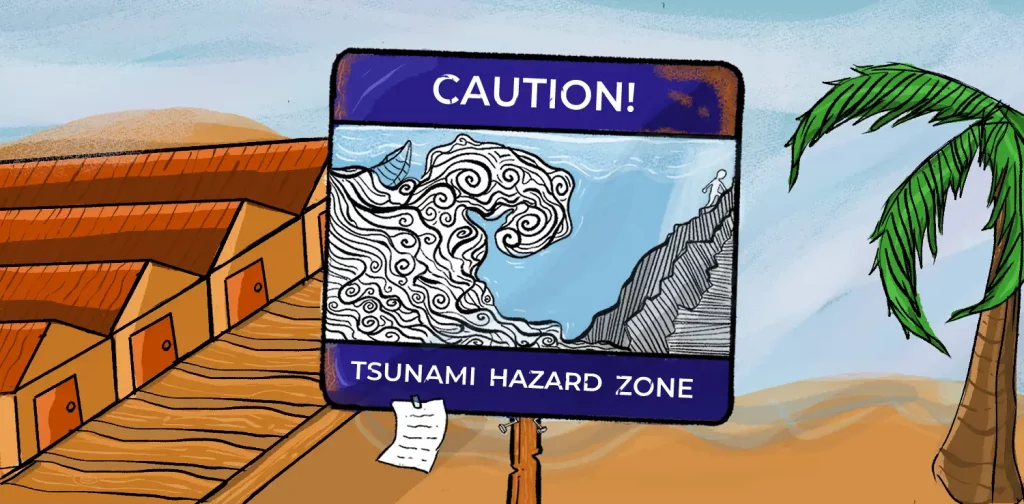
As the risks of tsunamis are exacerbated by climate change, we need a resilient infrastructure, early warning systems, and education to reduce the risks of disasters.
by Kresentia Madina 4 years ago 7 min read
banner caution tsuname

Illustration by Irhan Prabasukma.

In 2004, a massive undersea earthquake with a magnitude of 9.1-9.3 Mw occurred on the northern coast of Sumatra, Indonesia. The aftermath was this: a series of giant tsunami waves with a height of 30 meters struck the coasts of the Indian Ocean, leaving casualty after casualty in its wake. 

The tragedy known as the 2004 Indian Ocean earthquake and tsunami is one of the deadliest natural disasters in history, with the estimated casualties of 227,898 people in 14 countries. The tragedy was also the starting point of many tsunami mitigation initiatives worldwide.

The Danger of Tsunami

Tsunamis are giant waves generated when a large displacement of water happens in the ocean. The common triggers are earthquakes, volcanic eruptions, or underwater landslides. Unlike ordinary waves, tsunami waves can reach up to 30 meters above sea level and become hazardous once they hit the shore.

The unexpectedness factor plays a part in why tsunamis are deadly. When triggered by underwater hazards, the ocean water would retreat to the source as if sucked, creating a misleading impression that the water is shallow. The water would then come back to the shore in the form of rapid, turbulent water with a speed of 32-48 km/h once it approaches shallow water near the land. In a huge tsunami, the waves can knock off anything within one kilometer of the shore, including the coastal communities.  

Between 1998-2017, tsunamis caused more than 250.000 deaths globally, according to the WHO. People living in low-lying coastal areas and Small Island Developing States are the most vulnerable to extreme sea-level events. As the risks of tsunamis are exacerbated by climate change, we need a resilient infrastructure, early warning systems, and education to reduce the risks of disasters.

Tsunami Preparedness in Asia-Pacific
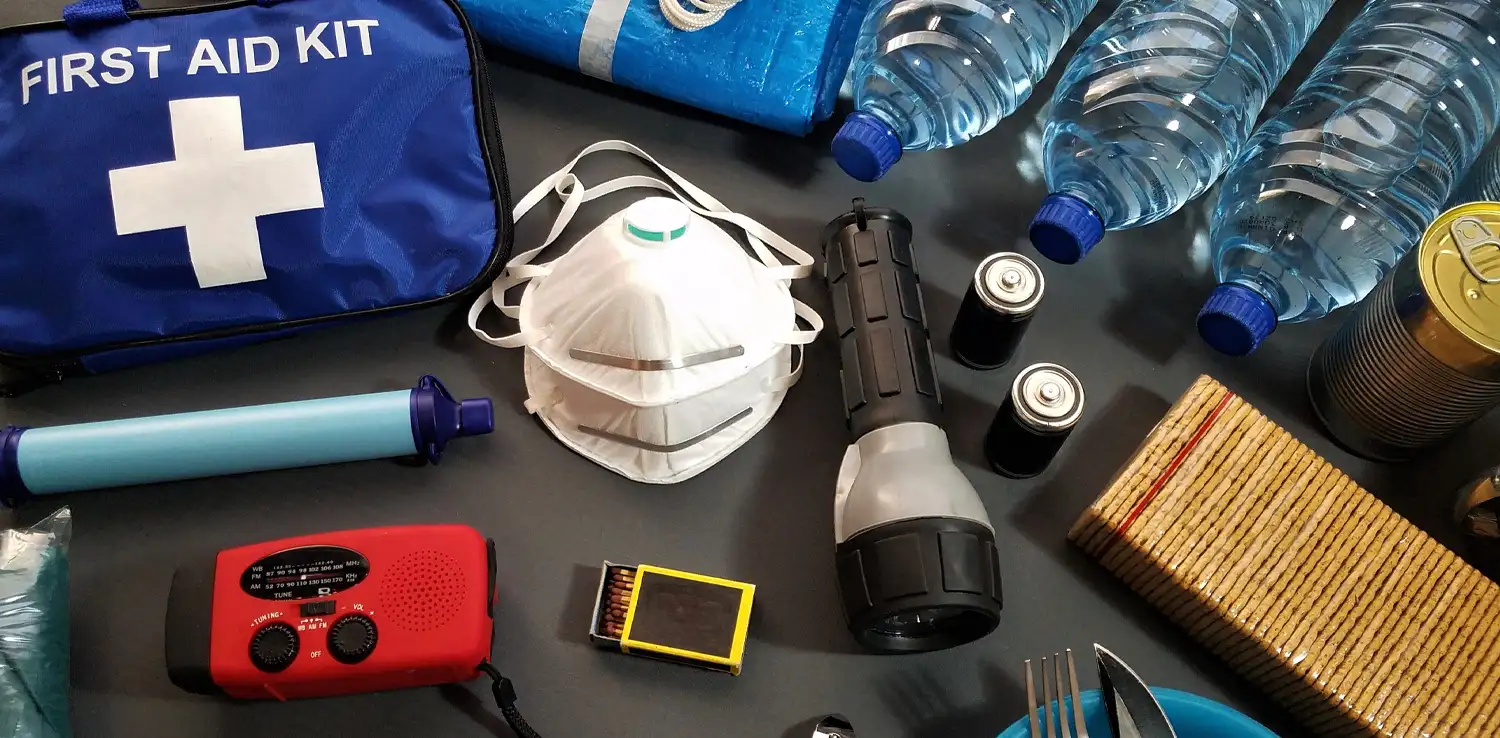
An early warning system is necessary for preparation against disasters.
An early warning system is necessary for preparation against disasters. | Photo by Roger Brown on Pexels.

Protecting coastal communities from extreme sea-level events and hazards requires comprehensive, effective, and multi-hazard early warning systems. The United Nations Office for Disaster Risk Reduction defines an early warning system as “an integrated system of hazard monitoring, forecasting and prediction, disaster risk assessment, communication and preparedness activities systems, and processes that enable individuals, communities, governments, businesses, and others to take timely action to reduce disaster risks in advance of hazardous events.”

The key to early warning systems is not to predict when the next tsunami will happen but to generate warnings by monitoring and detecting the hazardous events that could trigger tsunamis. As a disaster-prone area, the early warning system for all becomes crucial for the Asia-Pacific to the adaptation and resilience pathways to accelerate climate action in the region. 

Following the 2004 Indian Ocean Tsunami, the UNESCAP established The ESCAP Trust Fund for Tsunami, Disaster, and Climate Preparedness to support early warning systems through a multi-hazard approach. The Trust Fund focuses on creating effective, sustainable, end-to-end early warning systems for coastal hazards by strengthening regional cooperation. The Indian Ocean Tsunami Warning System, which currently operates in Australia, India, and Indonesia, is one of the initiatives supported by the Trust Fund, which contributes to saving 1,000 lives per year for the next 100 years.

On the other hand, UNESCO also launched the Tsunami Project to help schools in Asia-Pacific prepare their students for tsunami emergencies in partnership with the Government of Japan. The project has helped 380 schools organize their tsunami initiatives and trained 170,000 students, teachers, and school administrators.

Early Warning System for All
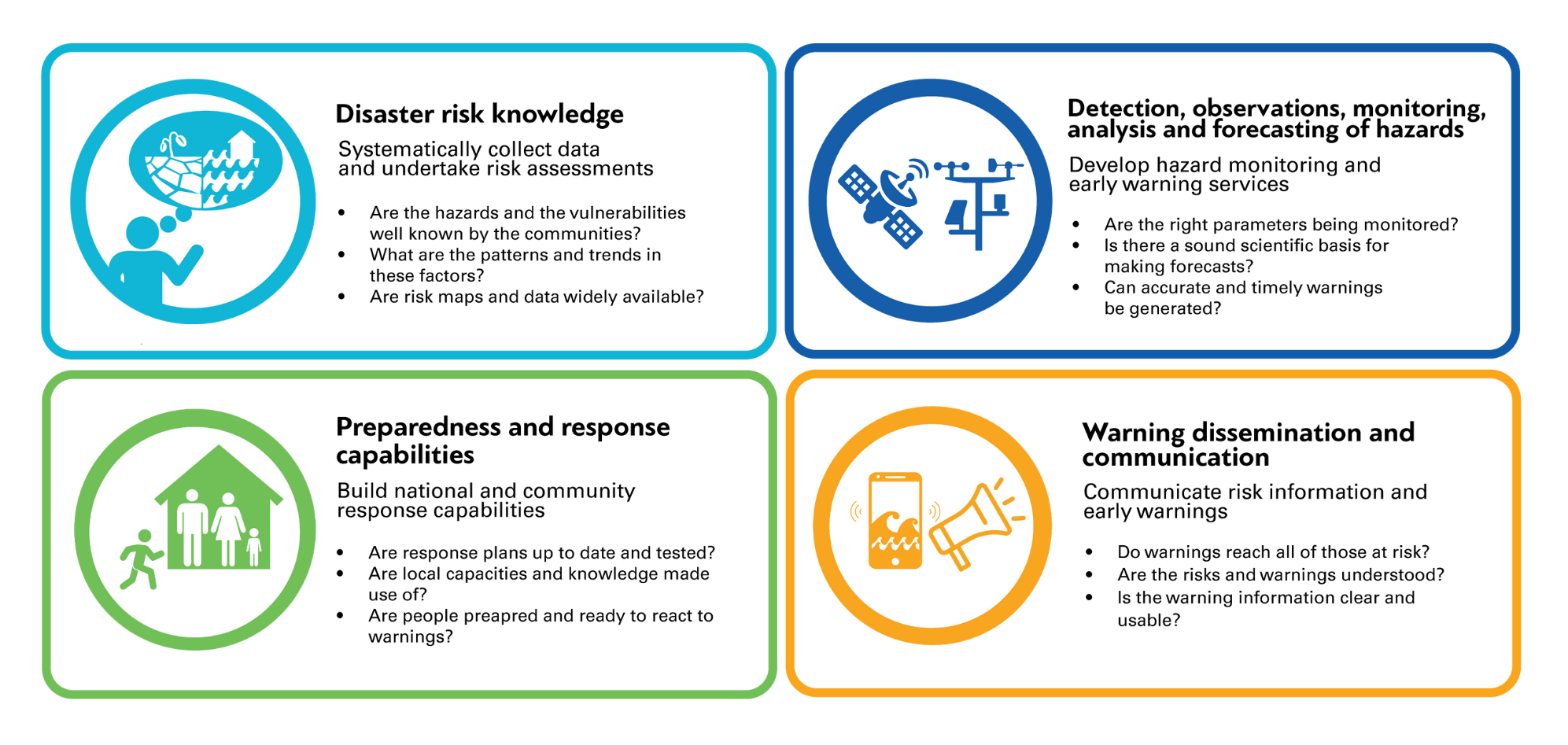
The four aspects of people-centered, multi-hazard early warning systems. | Photo by the World Meteorological Organization (WMO).

For it to become truly effective, an early warning system should be able to reach every level of society, from the government to the communities worldwide. Thus, the “Early Warning System for All” initiative became a five-year target stated by the UN Secretary-General António Guterres on World Meteorological Day in March 2022.

“Early warnings and action save lives. To that end, today I announce the United Nations will spearhead new action to ensure every person on Earth is protected by early warning systems within five years,” said Guterres.

The World Meteorological Organization (WMO), appointed to lead the initiative, stated that early warning systems are practical and feasible climate adaptation measures that save lives and provide economic benefits. However, a significant gap persists in implementing early warning systems in developing countries. The struggle also lies in the global incapacity to translate early warnings into action. 

In the end, creating climate adaptation efforts and resilient communities is proven to be crucial in the face of climate-related disasters. Building comprehensive, inclusive, accessible, and sustainable early warning systems is the key to mitigating and reducing the risks of disasters, especially in vulnerable areas.

Editor: Nazalea Kusuma

Kresentia Madina
Reporter at Green Network Asia | Website |  + postsBio

Madina is the Assistant Manager of Stakeholder Engagement at Green Network Asia. She holds a bachelor’s degree in English Studies from Universitas Indonesia. As part of the GNA In-House Team, she supports the organization's multi-stakeholder engagement across international organizations, governments, businesses, civil society, and grassroots communities through digital publications, events, capacity building, and research.
  • Kresentia Madina
    FedEx Engages Employees with Beach Clean-Up Initiative
  • Kresentia Madina
    Come Back Stronger: Building Philippines’ Resilient Economy Post-COVID-19
  • Kresentia Madina
    How Protection Law and Global Commitments Can Accelerate China’s Wetland Conservation
  • Kresentia Madina
    How Biotechnology Can Support Food Security and Energy Transition
  • Kresentia Madina
    Saving the Japanese Giant Salamander with Sustainable Daisen
  • Kresentia Madina
    How IKEA Plans to Transition to a Circular Business Model
  • Kresentia Madina
    Creating Inclusive and Accessible Public Transportation for All
  • Kresentia Madina
    Hope and Action: Faith and Religion in the Time of the Climate Crisis
  • Kresentia Madina
    Singapore Appoints the First Government Chief Sustainability Officer
  • Kresentia Madina
    Youth Leadership in 1M1B Activate Impact Summit
  • Kresentia Madina
    3 Ways We Can Be Responsible Travelers
  • Kresentia Madina
    Growing Singapore’s ESG Ecosystem with ESG Impact Hub
  • Kresentia Madina
    Empowering Migrants Against Climate Disasters
  • Kresentia Madina
    Mountain Partnership: Addressing Challenges of Mountain Ecosystems and Communities
  • Kresentia Madina
    With and By the People: Local Farmers’ Journey to Restore Kenya’s Soil
  • Kresentia Madina
    28 Million People Are Still in Forced Labor Today
  • Kresentia Madina
    Centering Survivors in Ending Violence Against Women
  • Kresentia Madina
    Indonesia to Develop Super Grid for Cross-Provincial Renewable Electricity Transmission
  • Kresentia Madina
    Supporting Multilingual Students with Multilingual Education
  • Kresentia Madina
    Australia Launches Website for Workplace Sexual Harassment Prevention
  • Kresentia Madina
    Birds Population Decline Reflects Our Environmental Condition
  • Kresentia Madina
    Degree of Urbanization: What Does “Urban Area” Mean Now?
  • Kresentia Madina
    Improving People, Animals, and Environment Health Through One Health Approach
  • Kresentia Madina
    How ASEAN Countries Can Provide Inclusive Education for Children with Disabilities
  • Kresentia Madina
    Hydrogen Fuels for Decarbonization & Development Efforts in Malaysia
  • Kresentia Madina
    Trust Exercise: Solving Crises with Solidarity, Sustainability, and Science at the 77th UN General Assembly
  • Kresentia Madina
    B-Corp Certified Gree Energy’s Commitments for Food Industry Decarbonization
  • Kresentia Madina
    China’s Four Decades of Journey: Lifting 770 Million People Out of Poverty
  • Kresentia Madina
    Balance or Burn: Taking Care of Your Mental Health at Work
  • Kresentia Madina
    Strategic Pathways for Disaster Risk Reductions in the Asia-Pacific SIDS
  • Kresentia Madina
    Putting Indigenous Peoples at the Forefront of Natural Preservation
  • Kresentia Madina
    No More Forced Labor and Child Labor in Uzbekistan’s Cotton Industry
  • Kresentia Madina
    Building Singapore’s First Hydrogen-Ready Power Plant
  • Kresentia Madina
    Nepal Reaches a New Milestone with 190% Increase of Tiger Population
  • Kresentia Madina
    New Definition of Museums Fosters Diversity and Sustainability
  • Kresentia Madina
    Buildings of the Future: Towards Cost-Effective, Net Zero Buildings
  • Kresentia Madina
    APRIL2030: Towards Sustainable Forest Management Practices
  • Kresentia Madina
    Advancing Green Economy and Celebrating Female Entrepreneurs in South Africa
  • Kresentia Madina
    Whale Migrations: Understanding the Habits, Threats, and Conservation Efforts
  • Kresentia Madina
    Conserving Iran’s Wetland Areas
  • Kresentia Madina
    The Tiaki Promise Encourages Tourists to Care for New Zealand’s Nature
  • Kresentia Madina
    Towards Financial and Digital Inclusion in Asia-Pacific’s Rapid Economic Growth
  • Kresentia Madina
    Gender-Responsive Financial Instruments for Women’s Resilience Against Disasters
  • Kresentia Madina
    Linking Forest Patches in Peninsular Malaysia
  • Kresentia Madina
    WOTR India: Rural Development Through a Holistic Approach
  • Kresentia Madina
    World Cities Summit 2022: Rebuilding Cities in the Time of Crisis
  • Kresentia Madina
    Seven Years of Improving Rice and Coffee Production in Vietnam
  • Kresentia Madina
    Raising Global Awareness on International Mangrove Day
  • Kresentia Madina
    Kyrgyzstan’s Plan for Mountain Sustainability
  • Kresentia Madina
    NEWater: Singapore’s Recycled Water
  • Kresentia Madina
    The Road to Closing Global Gender Gap According to the World Economic Forum
  • Kresentia Madina
    Is the Skill Development of Children and Youth on Track?
  • Kresentia Madina
    WE Day UGM 2022: Raising Awareness on Climate Change and Encouraging Community Empowerment
  • Kresentia Madina
    Ocean Conference: International Law, Financing, and Science-backed Frameworks for Small Island Developing States
  • Kresentia Madina
    Overview of Digital Sustainability in Asia Pacific Businesses
  • Kresentia Madina
    Sustainable Shipping Campaign for Art Industry
  • Kresentia Madina
    Jakarta’s Struggle Against Poor Air Quality
  • Kresentia Madina
    World Oceans Day 2022: Collective Actions for Ocean Revitalization
  • Kresentia Madina
    E-Waste Management Efforts in Singapore
  • Kresentia Madina
    Our Very Body: A Documentary Film Advocates for Soil Restoration
  • Kresentia Madina
    India’s International Queer Film Festival is Back to Physical Screening
  • Kresentia Madina
    Ministry Campaigns for Environmental Conservation at Java Jazz Festival 2022
  • Kresentia Madina
    Optimizing Vietnam’s Sea Potential with Blue Economy Scenarios
  • Kresentia Madina
    Deloitte 2022 Report Shows How Executives Perceive Climate Change
  • Kresentia Madina
    Wild Animals Are Not Pets
  • Kresentia Madina
    How New Zealand Plans to Combat Modern Slavery
  • Kresentia Madina
    Unlocking Indonesian Green Jobs Opportunity with Zona EBT
  • Kresentia Madina
    Singapore and New Zealand To Collaborate on Developing Sustainable Aviation Fuel
  • Kresentia Madina
    Fashion Revolution Week 2022 Campaigns for Fair Living Wages
  • Kresentia Madina
    Panasonic Built Japan’s Third Sustainable Smart Town in Osaka
  • Kresentia Madina
    Shelters for Thailand Stray Dogs
  • Kresentia Madina
    Indonesia’s PLN Supplies Six Major Companies with Green Electricity
  • Kresentia Madina
    Improving Sustainable Living in Singapore Through Green Towns Programme
  • Kresentia Madina
    Pokémon GO Sustainability Week 2022: How Gaming Industry Can Support Sustainability
  • Kresentia Madina
    China’s First Vertical Forest and the Use of Biophilic Design for Sustainable Urban Spaces
  • Kresentia Madina
    Hyundai’s Newest Campaign Supports Sustainable Mobility for FIFA World Cup 2022
  • Kresentia Madina
    Restoring Underwater Kelp Forests in Australia
  • Kresentia Madina
    Reducing Cow Emission Using a Seaweed-based Ingredient
  • Kresentia Madina
    Waste Management of the Maldives’ Landfill Island Is in Progress
  • Kresentia Madina
    Sustainability Isn’t All Environment. Then, What Is It All About?
  • Kresentia Madina
    Indonesia Welcomed a Baby Sumatran Rhino
  • Kresentia Madina
    How the Vietnam Water Crisis Affects Children
  • Kresentia Madina
    Hunger and Freedom: COVID-19 on Thailand’s Elephant Tourism
  • Kresentia Madina
    Raising the Age of Consent in the Philippines and the Hope for More
  • Kresentia Madina
    Australia Launches A National Battery Recycling Scheme
  • Kresentia Madina
    Singapore Wants to Tackle Greenwashing at Asset Management Level
Green Network Asia

YOUR TITLE FOR CONDITION 1

YOUR BODY TEXT FOR CONDITION 1
YOUR BUTTON 1 TEXT YOUR BUTTON 2 TEXT

Continue Reading

Previous: Improving People, Animals, and Environment Health Through One Health Approach
Next: AC Ventures: ESG and Impact Investing in Southeast Asian Startups

Related Stories

a quite large body of water covered with yellow algae under blue skies Test premium post 1 min read
  • Brief

Test premium post

by Ahmad Bagwi Rifai 2 years ago
a blue roam rapid mass transit bus Electric Vehicles Roam the Roads of Kenya 1 min read

  • Featured
  • News

Electric Vehicles Roam the Roads of Kenya

by Nazalea Kusuma 4 years ago
a hand pointing a pencil at charts titled “Finance Review” plastered on a whiteboard Come Back Stronger: Building Philippines’ Resilient Economy Post-COVID-19 6 min read

  • Featured
  • News

Come Back Stronger: Building Philippines’ Resilient Economy Post-COVID-19

by Kresentia Madina 4 years ago
Abigail Lovell, Chief Sustainability Officer of Experian. Inside Experian’s Sustainability Journey: An Interview with Chief Sustainability Officer Abigail Lovell 7 min read
  • Featured
  • Interview

Inside Experian’s Sustainability Journey: An Interview with Chief Sustainability Officer Abigail Lovell

by Marlis Afridah 4 years ago
a quite large body of water covered with yellow algae under blue skies How Protection Law and Global Commitments Can Accelerate China’s Wetland Conservation 6 min read
  • Featured
  • News

How Protection Law and Global Commitments Can Accelerate China’s Wetland Conservation

by Kresentia Madina 4 years ago
hands covered in blue gloves working with tools in the lab How Biotechnology Can Support Food Security and Energy Transition 7 min read

  • Brief
  • Featured

How Biotechnology Can Support Food Security and Energy Transition

by Kresentia Madina 4 years ago
[popup_anything id="1939"]

You may have missed

Test Custom Feature Image 1 min read
  • News

Test Custom Feature Image

by Ahmad Bagwi Rifai 12 months ago
a quite large body of water covered with yellow algae under blue skies Test premium post 1 min read
  • Brief

Test premium post

by Ahmad Bagwi Rifai 2 years ago
Test Artikel Free 2 min read
  • Rilis

Test Artikel Free

by Ahmad Bagwi Rifai 3 years ago
a blue roam rapid mass transit bus Electric Vehicles Roam the Roads of Kenya 1 min read
  • Featured
  • News

Electric Vehicles Roam the Roads of Kenya

by Nazalea Kusuma 4 years ago
  • Terms of Service
  • Privacy Policy
  • FAQ
  • Contact Us
  • Facebook
  • Instagram
  • Twitter
  • LinkedIn
  • YouTube
  • Spotify
  • Pinterest
  • Telegram
  • Etsy
  • Tokopedia
  • Media Link 11
  • Media Link 12
  • Media Link 13
  • Media Link 14
  • Media Link 15
Copyright © All rights reserved.